

Air conditioning failures during high temperatures are alarmingly common. A heatwave puts unusual pressure on every part of an HVAC system, revealing issues that may have gone unnoticed in milder conditions. When someone asks, “Why does my A/C not seem to be working during a heatwave,” the answer isn’t usually simple, and that’s exactly what makes the situation frustrating. What follows is a breakdown of what typically causes this scenario, with a clear view on how and when professional A/C repair service plays a role.
A/C Struggling to Cool in Heat
HVAC specialists often report this issue right as regional temperatures hit triple digits. The cooling process depends on several components working in harmony, and if even one fails or lags, performance drops noticeably. During excessive heat, that kind of imbalance becomes more noticeable, sometimes the air feels lukewarm, other times the system seems like it’s running but doing nothing.
- Research from Energy.gov shows energy usage spikes nearly 80% when daytime highs stay above 95°F for multiple days.
- Older systems with SEER ratings under 13 lose efficiency rapidly once daily highs exceed design capacity.
- Indoor units with blocked filters or neglected coils can’t keep up and often short cycle under thermal stress.
Unresponsive Thermostat Problems
Not all cooling issues begin with the A/C unit itself. The thermostat serves as the system’s command center, and small malfunctions here can trigger major performance gaps. Smart thermostats may freeze up or go offline during Wi-Fi outages or battery failures, giving the illusion the A/C has failed when it’s really an input issue.
- Poor thermostat placement, especially near windows or electronics, leads to misread ambient temperatures.
- HVAC.com states that incorrect settings or wiring errors cause up to 25% of cooling complaints during hot months.
- Older analog thermostats often lack accuracy once ambient humidity rises past 70%, which is common during heatwaves.
Compressor Shuts Down in Extreme Heat
Once outdoor temperatures climb above 100°F, compressors work overtime to maintain the pressure needed to cool refrigerant effectively. Prolonged operation without recovery time leads to overheating, and this typically results in system shutdown or poor cooling performance. This isn’t rare, especially in systems nearing their service limit.
- Carrier confirms internal compressor temps can rise to 150°F or more during summer spikes.
- Malfunctioning capacitors often fail silently but result in stalled startup or random shutdowns.
- Surge-related failures rise by 30% during peak grid demand periods according to the U.S. Department of Energy.
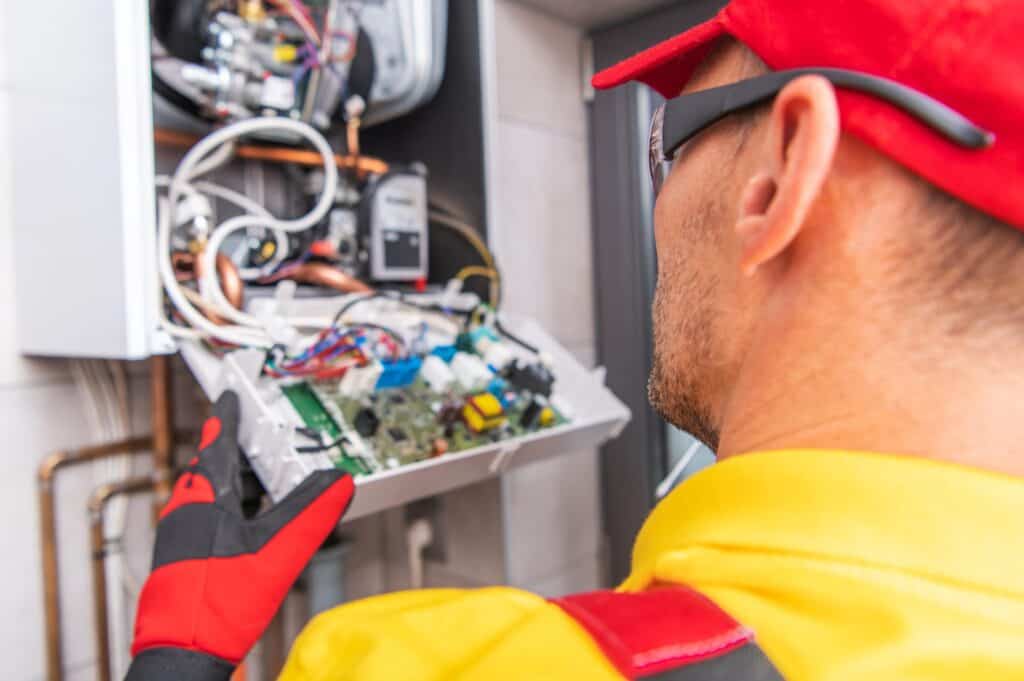
Blowing Air but Not Cooling
Sometimes the fan blows air with full force, yet the space doesn’t cool. That kind of symptom confuses homeowners because airflow seems fine on the surface. But warm air from vents usually means the cooling cycle isn’t completing or refrigerant isn’t circulating properly.
- The EIA reports that systems low on refrigerant cool 40% slower than properly charged ones.
- Dirty evaporator coils cause condensation buildup and disrupt normal temperature exchange.
- Partially blocked ductwork results in rooms that remain hot while the system overcompensates, running longer than needed.
Overloaded Electrical Components
A/C systems demand significant electrical input during high-use periods, and circuit strain during heatwaves often reveals deeper infrastructure issues. In older homes especially, outdated wiring and breakers can’t support newer systems. Power interruptions or surge damage are frequently misdiagnosed as mechanical failure.
- The National Renewable Energy Laboratory shows a 40% increase in A/C-related electrical overloads during summer months.
- HVAC wiring over 15 years old often lacks the insulation needed to handle modern power draw.
- Homes relying on shared circuits or split wiring are more prone to blown fuses when appliances and HVAC run together.
Knowing When It’s Time to Call a Technician
Many homeowners attempt a few DIY checks, resetting breakers, changing filters, or toggling the thermostat, but the problem often persists. Lingering odors, uneven cooling, or frequent on-off cycling should prompt a professional inspection. Running a damaged system too long risks internal breakdown and higher energy costs.
- Federal EPA regulations require that only licensed technicians handle refrigerant and sealed systems.
- Moisture buildup around vents or units often signals internal clogs or leaks.
- Strange sounds such as clicking, hissing, or humming may suggest internal relay failure or system imbalance.
Key Takeaways on Why Does My A/C Not Seem to be Working During a Heatwave
An air conditioner showing signs of failure during high heat likely faces a combination of stress factors. Each part, compressor, filter, coil, thermostat, can falter alone or amplify issues when one begins to weaken. Paying attention to irregular performance, especially under strain, often gives early clues before full breakdown occurs. Knowing when to involve a professional A/C repair service is as important as routine upkeep itself.
- Excess heat exposes weak points in aging or under-maintained systems.
- Thermostat errors and compressor shutdowns account for many sudden failures.
- Fan-only operation without cooling usually signals refrigerant or coil issues.
- Grid-related surges can damage systems beyond the visible.
- Maintenance done early in the season prevents strain-related shutdowns.
Frequently Asked Questions
What’s the first thing to check when my A/C feels weak during a heatwave?
Start with the filter and thermostat. Dirty filters reduce airflow and confuse sensors, while thermostat settings often default to “fan” or eco modes during power events.
Why does my A/C shut off randomly in the heat?
That usually points to overheating. The compressor likely trips a thermal limit or the circuit breaker activates as a protective response.
Can a heatwave alone break my A/C?
It won’t break a healthy unit but can expose failing parts. Older systems especially show signs of distress like short cycling, warm airflow, or motor humming.
Is it bad to run my A/C all day during extreme heat?
If the system is properly maintained, it’s expected to run longer. However, constant cycling without reaching the desired temperature suggests a capacity or airflow problem.
Should I turn off my A/C during a brownout?
Yes. Low voltage during a brownout can strain the motor and damage internal parts. Wait until normal voltage resumes before turning it back on.
- About the Author
- Latest Posts

Tropical AC and Heat specializes in residential and commercial HVAC services, backed by a decade of industry experience. The company’s expertise ranges from simple residential settings to complex industrial chillers.